Why rusks work so well on campsite mornings
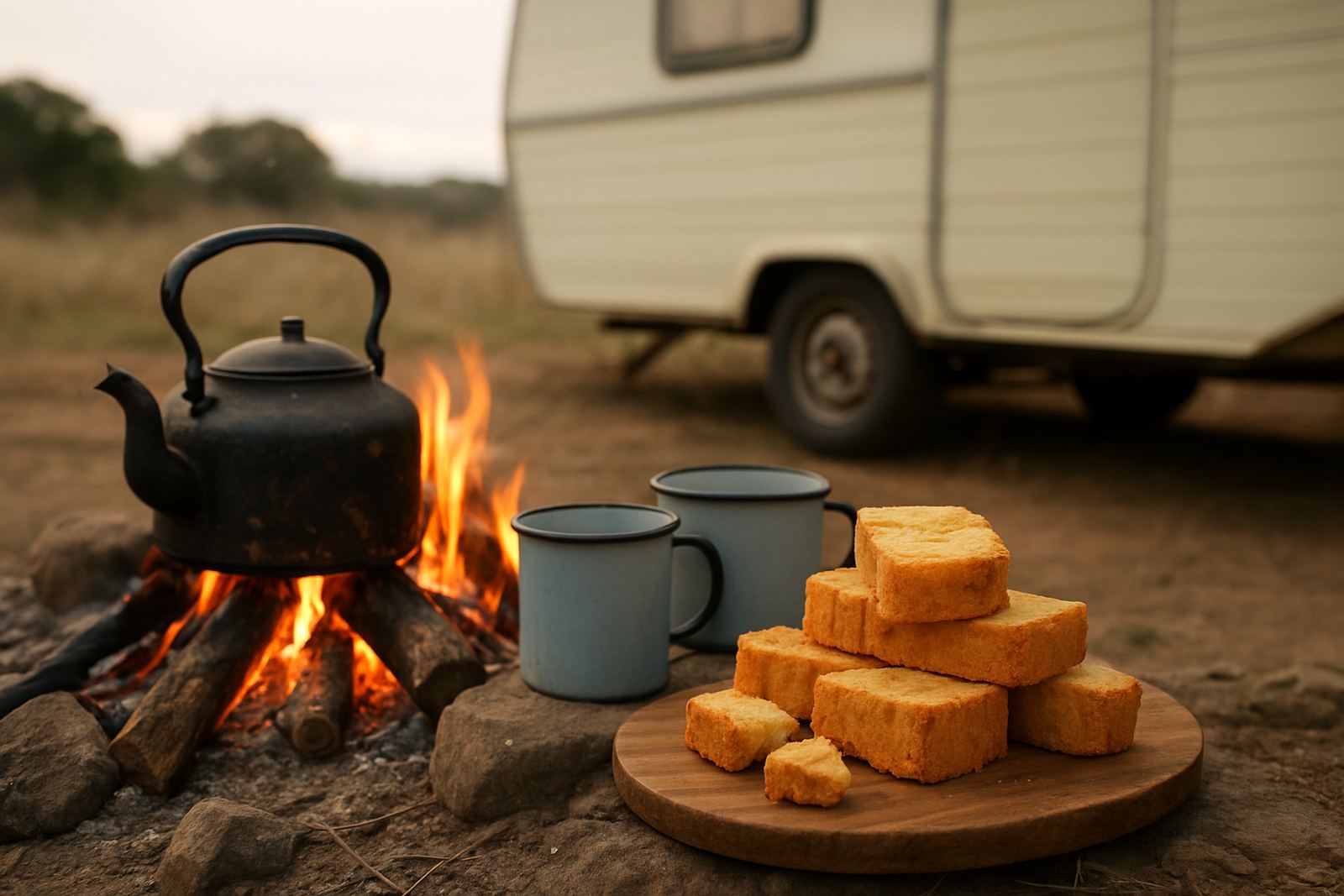
Camping breakfasts need to be simple. You do not always have a full kitchen, and on many sites the first cup of coffee happens before the stove is even lit. Rusks fit that rhythm well because they keep easily, travel without fuss, and do not need refrigeration. In a caravan or tent setup, that matters a lot.
For family trips, fishing weekends, Overberg getaways or long stays in the Karoo, rusks give you something steady when everyone is hungry but the fire is still catching. They pair nicely with tea, coffee or warm milk, and they hold up well in dry inland heat as well as the damp sea air you get in places like Plettenberg Bay, Hermanus or the West Coast.
They are also useful when load shedding interrupts the morning routine. If the kettle is on gas and the fridge is not being opened often, a tin or sealed container of rusks keeps breakfast sorted without any extra stress.
Typical camping kit that suits rusks
You do not need much to serve rusks properly. A basic camp setup usually includes a kettle, enamel mugs, a airtight container for dry goods, teaspoons, a chopping board for fruit and maybe a small crate or basket for breakfast items. If you are travelling with children, separate snack tins help keep everything neat and reduce mess in the vehicle.
- Gas kettle or whistling kettle for quick boiling
- Insulated flask for early starts and game drives
- Sealable tin, clip-top jar or food-grade container
- Enamel mugs or lightweight cups
- Small cooler box for milk, butter and fresh fruit
For caravan owners, a dedicated breakfast shelf works well. Keep the rusks with tea, coffee, sugar and serviettes in one place so nobody is hunting around at 6am. In tent camps, a dry crate under the table or inside the awning is usually better than leaving packets open on the picnic table where wind and ants can get to them.
How to plan the layout in a caravan or camp kitchen
A good camp breakfast layout saves time and keeps the space calm. Put the hot drinks closest to the kettle, then the rusks and cups beside them. If you are travelling with a pop-top caravan or a compact trailer, think in short reach zones. What you need first should be within arm’s reach, not buried in a back locker.
In wetter coastal areas, moisture is the main issue. Rusks should stay in a sealed container, not loose in a packet that has been opened and closed many times. In dry inland areas the problem is usually crumbs, heat and dust, so a hard tin or lidded tub is best. If the trip runs over several days, split your supply into two containers. Keep one in use and the other sealed up. That way the whole batch does not soften or pick up smells from onions, spices or wet gear.
If you are packing for a group, set out a simple breakfast point: one tray for mugs, one tin for rusks, one basket for fruit and one flask for hot water. It keeps everyone moving and avoids crowding around the stove when it is still dark.
Common camping mistakes with breakfast stock
The biggest mistake is overpacking fresh items and underpacking dry ones. Eggs, bread and pastries sound good on paper, but they spoil faster and need more prep. Rusks do not ask for much, which is why they suit long weekends and school holiday trips so well.
Another mistake is leaving open packets in a damp caravan cupboard. Morning condensation can make rusks soft before you know it. A third issue is choosing snacks that crumble badly in the car. If the family is driving from Paarl to Knysna or up toward Namaqualand, you want something that arrives in one piece.
- Do not store rusks near the kettle steam outlet
- Do not leave packets open overnight in a tent
- Do not pack soft biscuits where they will break under cookware
- Do not rely only on chilled breakfasts for multi-day trips
Another common slip is not buying enough. A couple may get through one pack quickly, but a full camp table can finish more than expected, especially if there are hikers, children or early risers in the group.
Budget ranges for campsite breakfasts in Rand
For a small couple’s camping trip, a breakfast budget of about R120 to R220 can cover rusks, tea, coffee, milk and some fruit for a few mornings. If you are travelling with a family of four or five, a more realistic range is R250 to R500 depending on what else you add to the table.
For group outings, clubs or church camps, bulk ordering is the easier option. A set breakfast pack with rusks, drinks and a few extras often works out better than buying loose items at a garage near the site. That matters in holiday towns where convenience prices climb fast, especially during December and Easter.
When planning the full camp shop, many households set aside R300 to R800 for dry breakfast goods, depending on how long they are away. Rusks are usually one of the better-value items in that basket because they last well and do not need special storage. That makes them a sensible buy for people camping near the coast, in the bush or at municipal caravan parks where space is limited.
When to choose buttermilk or muesli rusks
Buttermilk rusks are the classic choice for a strong cup of coffee before sunrise. They are plain enough for everyday use but filling enough to carry you through a long morning drive or a beach walk. Muesli rusks suit campers who want a little more texture and a heartier bite with fruit, yoghurt or fruit juice at breakfast.
For shared trips, it helps to have both. Some people want a lighter snack and others want something more substantial after a cold night in a sleeping bag. If you are packing for hospitality guests, fishing clients or a family reunion at a resort, mixed packs give everyone a choice without complicating the setup. It also helps when the kids have one preference and the adults another.
At Rusk in Paarl, the focus stays on homely, dependable morning food that travels well. That is useful whether your trip starts in Stellenbosch, the Boland, the Garden Route or further inland. The point is not to overthink breakfast, just to make sure it is there when the kettle boils.