Choose a morning flavour that feels right
For breakfast, the best rusk is usually the one that matches the rest of the meal. If you want something familiar and plain, buttermilk works well with tea, coffee or warm milk. If you prefer a bit more texture, muesli brings a grainy bite that feels filling without being heavy.
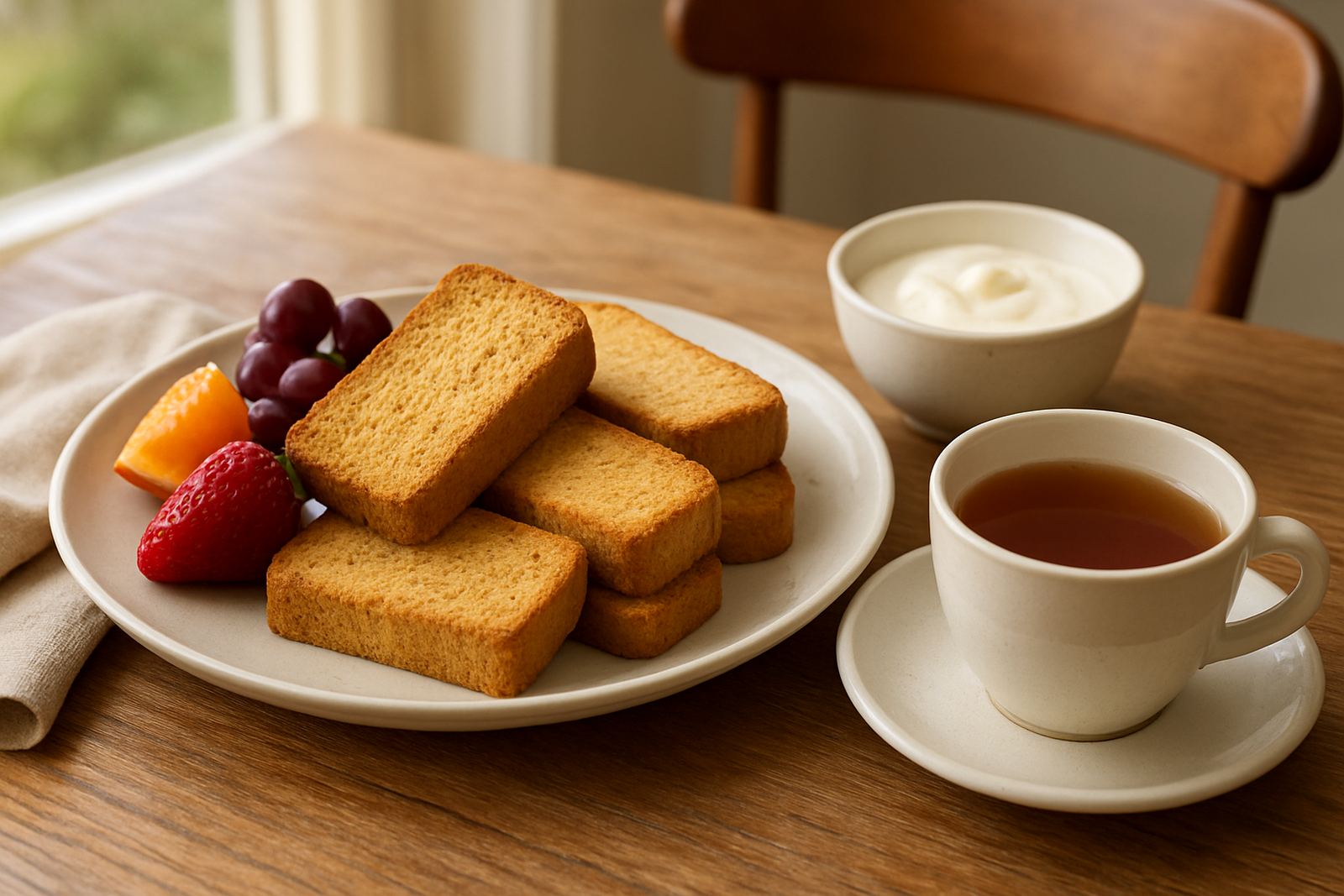
When serving early in the day, think about what else is on the table. Fresh fruit, yoghurt, eggs or toast all pair well with a rusk because the rusk adds crunch without making breakfast too rich. In many homes, that is the difference between a rushed bite and a proper start to the day.
How to serve rusks at breakfast without making a mess
Rusks are best served in a way that lets each person decide how soft or crisp they want them. Some people like a quick dip, others prefer a longer soak. If you are serving guests, put out a small jug of tea or coffee, a bowl of rusks and a few napkins so people can help themselves.
- Place rusks in a covered tin or jar to keep them dry.
- Serve with mugs that are easy to hold in the morning rush.
- Keep butter and jam nearby if someone wants a sweeter plate.
- Offer milk or warm water for those who like a lighter drink.
A small tray near the kettle or coffee plunger helps keep everything together, and reduces spills when the house is busy. It also makes it easier for early risers to grab a quick breakfast before school or work.
Simple breakfast pairings that work at home
Rusks are versatile, but breakfast pairings matter. A buttermilk rusk suits black tea, rooibos, filter coffee and warm milk. A muesli rusk can sit nicely beside fruit salad, plain yoghurt or a boiled egg if you want more staying power through the morning. That mix of textures keeps things interesting.
If you are planning breakfast for a group, keep the pairings plain and practical. Strong flavours can overpower the rusk, while simple sides let it do its job. A little honey, a sliced banana or a spoon of yoghurt is usually enough, no need to complicate it.
- Buttermilk rusk and tea for a classic start.
- Muesli rusk and yoghurt for a quicker, lighter plate.
- Rusk with coffee and fruit for early meetings or school mornings.
- Rusk with warm milk for children or anyone wanting less caffeine.
A practical check before you buy for breakfast use
Before you order rusks for regular breakfast use, check the pack size and how often your household actually eats them. A family that has rusks every morning will go through a box quickly, while a smaller household may prefer to buy less often. It helps to keep one pack open and one sealed, so you dont run short mid-week.
- Choose a flavour people will eat more than once a week.
- Check whether you need smaller packs or bulk supply.
- Store in a cool, dry cupboard away from the stove.
- For coastal homes, close the container tightly because humidity can soften them.
Good storage matters more than many people think. In summer, especially in places where kitchens get warm, a sealed tin or jar can help keep the texture right for longer.
Breakfast rusks for offices, guesthouses and weekend visitors
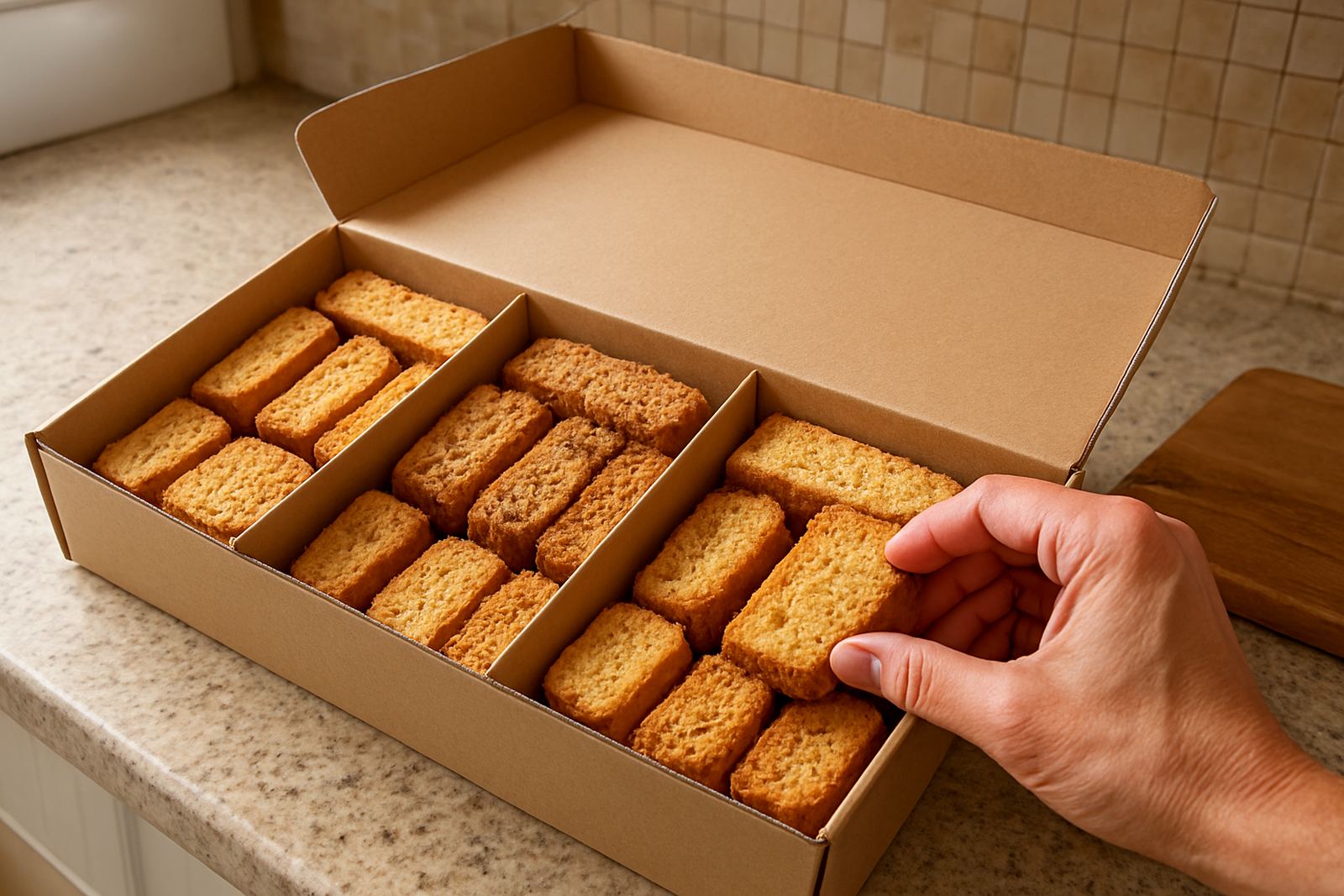
If you are buying rusks for a guesthouse, office kitchen or holiday home, breakfast service needs to be easy and tidy. Rusks are useful because they do not need refrigeration and they travel well in a closed container. That makes them handy for early check-ins, catering tables and short-stay guests who want something simple before the day starts.
For hospitality use, portion the rusks into bowls or paper sleeves so guests do not handle a whole pack. In offices, pair them with tea, coffee and sugar sachets for a neat self-service station. In colder months, this is often the first thing people reach for before the meeting starts.
How to keep the texture right from first bite to last
The best breakfast rusk has a dry outside and enough body to stay together when dipped. If the pack has been open too long, the rusk may lose its snap. If it is too hard, a short dip in tea or coffee brings it back into balance. It should feel easy to chew, not crumbling everywhere.
If you are serving children or older family members, break the rusk in half before putting it out. That makes it easier to handle and reduces crumbs on the table. A small change like that can make breakfast calmer, especially on weekdays when everyone is in a hurry.
- Open the pack only when you need it.
- Use a dry spoon or tongs to lift rusks from a tin.
- Keep them away from steam, kettles and dishwashers.
- Replace any soft rusks in the cupboard before they lose freshness.
For households in Paarl, Wellington, Stellenbosch and the surrounding area, breakfast often needs to be quick and practical. A well kept rusk can handle that without fuss, and still feel like a proper treat.